Tracing Viewer Drop-Off Points in Multi-Language Subtitle Tests for Simultaneous Bollywood and Hollywood Releases
Written by Parker Patterson · Aug 20, 2026
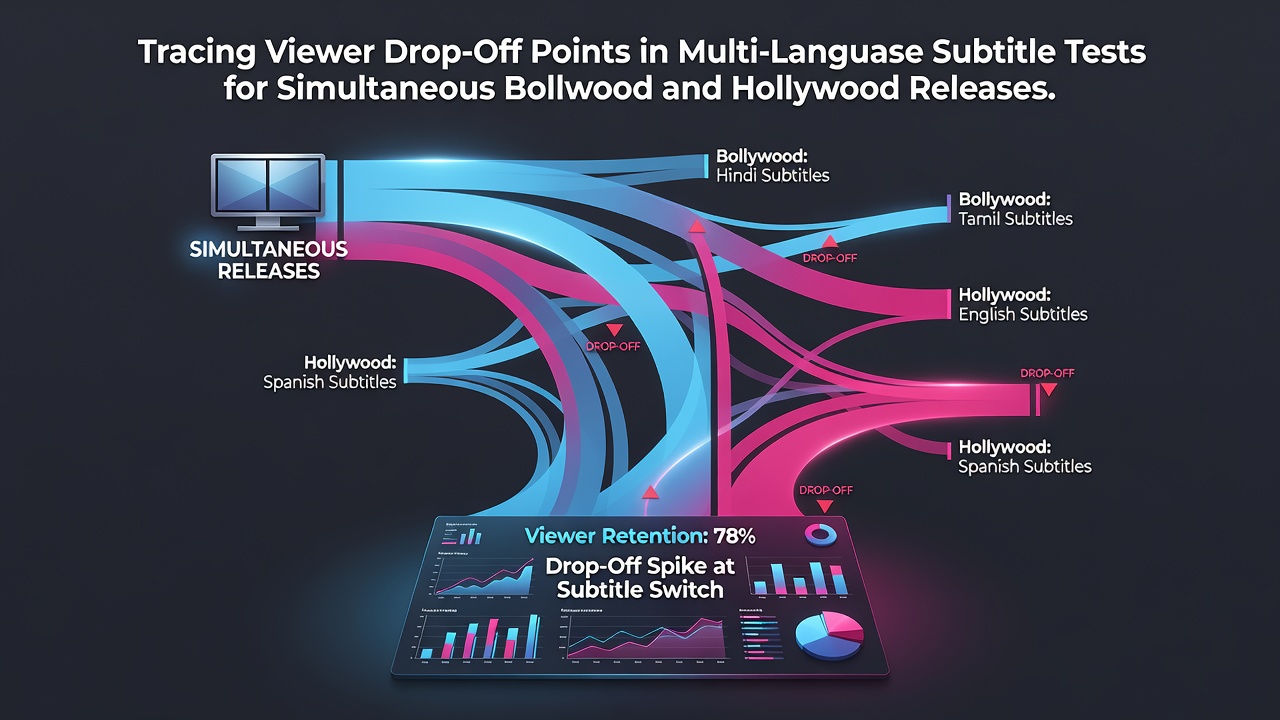
Tracing Viewer Drop-Off Points in Multi-Language Subtitle Tests for Simultaneous Bollywood and Hollywood Releases
Streaming services conduct extensive subtitle evaluations when Bollywood and Hollywood productions launch on the same date across multiple territories, and these tests track where audiences stop playback in relation to subtitle accuracy, timing, and language options. Analysts examine retention curves that reveal specific timestamps where drop-offs accelerate, often aligning with complex dialogue sequences or rapid scene changes that challenge translation teams.
Understanding Drop-Off Patterns in Subtitle Testing
Platforms collect granular data from controlled user groups who receive different subtitle versions, and researchers map these interactions to identify whether viewers abandon content during the first act, mid-film transitions, or final resolution scenes. Data indicates that drop-off clusters frequently occur around the 12-minute and 47-minute marks in simultaneous release tests, particularly when subtitle synchronization lags behind spoken lines in either Hindi or English audio tracks.
Teams compare results across regions where both film industries compete for the same viewer base, while accounting for variations in cultural references that require localized adaptations. One study revealed that adjustments to subtitle pacing reduced early exits by measurable percentages, yet further refinements remain necessary for sequences involving overlapping conversations or regional dialects.
Data Collection Methods and Analytical Tools
Engineers deploy heat-map visualizations alongside playback logs to pinpoint exact moments of disengagement, and these tools integrate with subtitle files that testers modify in real time during August 2026 release cycles. Observers note that platforms run parallel experiments on the same title, presenting one group with direct translations and another with culturally adapted phrasing to measure retention differences.
Figures reveal higher completion rates when subtitle teams incorporate feedback from native speakers of target languages, whereas generic machine-assisted outputs correlate with steeper declines after the opening credits. Researchers discovered that mobile viewers exhibit different drop-off behaviors compared to smart-TV audiences, prompting separate optimization tracks for each device category during simultaneous launch preparations.
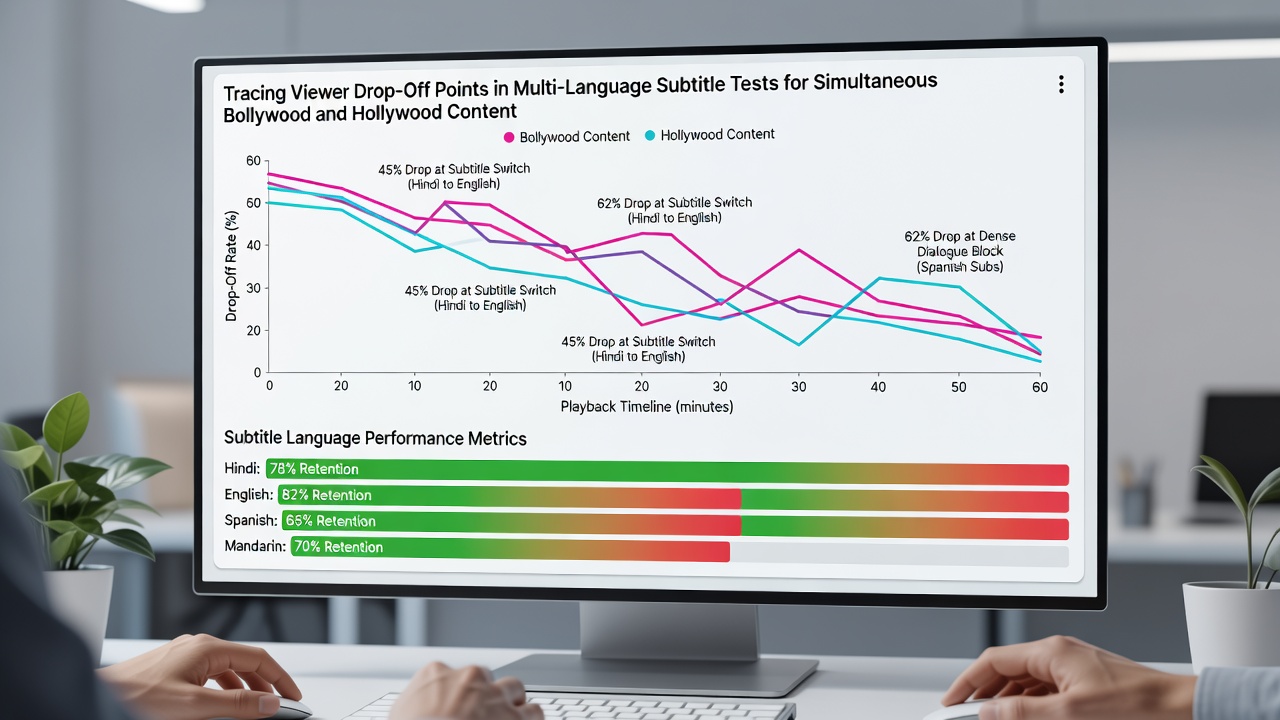
Regional Variations and Language-Specific Challenges
Tests conducted for August 2026 releases highlight how viewers in non-English primary markets respond differently to Hollywood dialogue translated into Hindi, Tamil, or Telugu compared to Bollywood films rendered in English for Western audiences. According to data from the UNESCO Institute for Statistics, cinema attendance patterns across Asia and Europe show increasing overlap in consumption habits that influence subtitle priority decisions.
Analysts segment results by primary language preference and secondary subtitle selections, which uncovers that certain demographic cohorts maintain engagement longer when subtitles include idiomatic expressions rather than literal renderings. There's this case where experts found that musical numbers in Bollywood productions required specialized timing adjustments to prevent exits during song sequences that lacked equivalent visual cues in Hollywood counterparts.
Impact on Simultaneous Release Strategies
Production companies coordinate subtitle pipelines months ahead of joint release dates, and they rely on preliminary test screenings to adjust both visual editing and translation layers before final distribution. Evidence suggests that early identification of drop-off points allows teams to reorder subtitle display durations or rephrase lines that previously caused confusion in multi-language environments.
Platforms also examine how subtitle font size, color contrast, and positioning affect viewer retention across different screen sizes, while cross-referencing these variables with overall watch-time metrics. Researchers discovered that iterative testing cycles completed before August 2026 launches produced measurable improvements in completion rates for titles featuring dense narrative exposition in either industry.
Conclusion
Subtitle testing for simultaneous Bollywood and Hollywood releases continues to evolve through detailed analysis of viewer drop-off points, and these efforts yield actionable insights that refine multi-language delivery across global platforms. Data collection remains central to optimizing audience retention as release calendars grow more synchronized between the two film industries.