The Silent Language of Film Previews: How Editing Pacing Affects International Audience Engagement
Written by Bianca Schulz · Aug 23, 2026
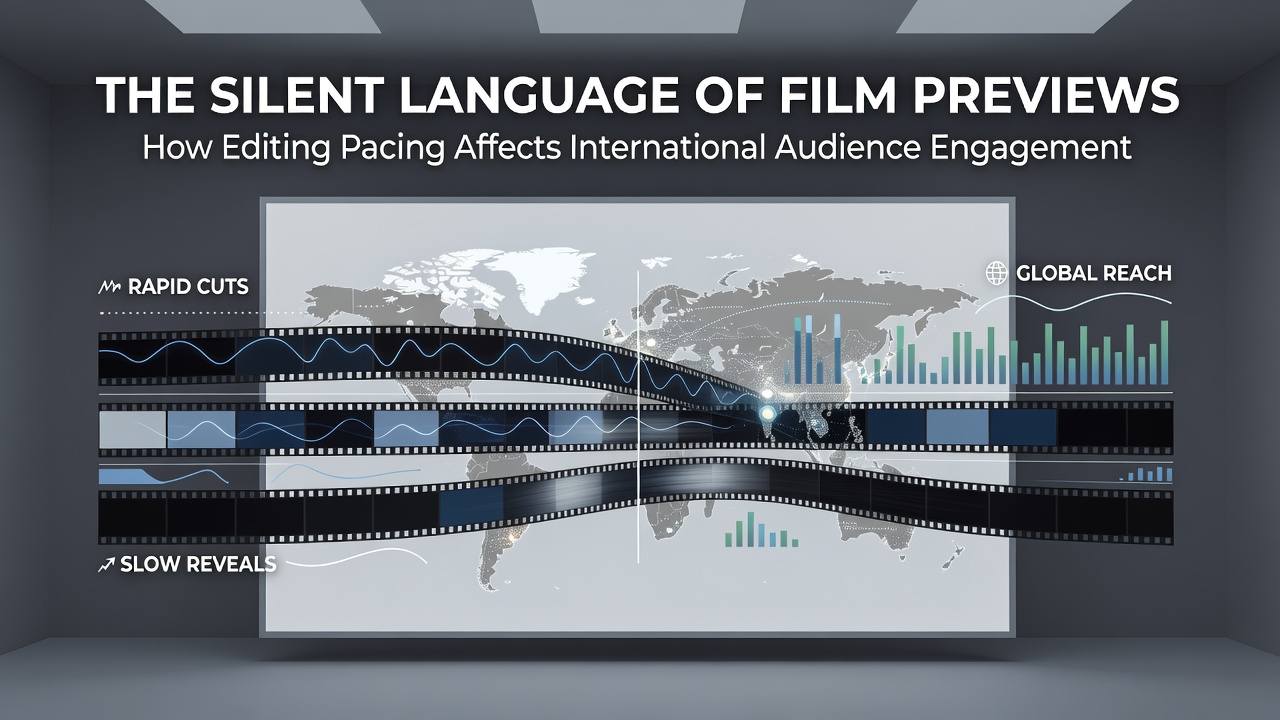
The Silent Language of Film Previews: How Editing Pacing Affects International Audience Engagement
Editing pacing in film previews shapes how viewers across different regions respond to upcoming releases, and data from trailer analytics platforms shows clear patterns in retention rates tied directly to cut frequency and sequence length. Researchers at film studies departments have tracked thousands of preview views in multiple countries, finding that shorter shot durations often correlate with higher completion rates on streaming platforms during peak release seasons. In August 2026, industry reports highlighted a surge in cross-border trailer consumption, with platforms noting increased engagement from audiences in Asia and Europe when pacing aligned with local viewing habits.
Core Elements of Pacing in Previews
Film previews rely on precise control over shot length, transition speed, and rhythm to build anticipation without revealing plot details, and editors achieve this through techniques such as rapid montage sequences interspersed with longer establishing shots. Studies from academic institutions indicate that average cut intervals in successful international trailers fall between 1.5 and 3 seconds for action-oriented content, whereas dramatic films maintain intervals closer to 4 to 6 seconds to allow emotional beats to land. Those who analyze viewer drop-off data observe that mismatches in these intervals lead to early exits, particularly when previews target markets with varying attention metrics reported by regional streaming services.
Regional Variations in Audience Response
Audience engagement metrics collected across continents reveal that pacing preferences differ based on cultural exposure to media formats, with faster cuts resonating more strongly in markets saturated by music videos and short-form content. Data compiled by the European Audiovisual Observatory demonstrates that trailers with moderate pacing retained 15 to 20 percent more viewers in Western European countries compared to ultra-rapid edits during the first half of 2026. Meanwhile, observers tracking Asian markets note higher completion rates for previews that incorporate slightly extended pauses, allowing subtitles to register fully before the next visual shift occurs.
What's interesting is how these patterns emerge consistently in large-scale A/B testing conducted by distribution companies, where versions of the same preview are released with adjusted tempos to measure geographic performance. One analysis of preview campaigns showed that Latin American audiences responded favorably to rhythmic editing that mirrored popular local television pacing, resulting in elevated share rates on social platforms. Researchers continue to examine these differences through eye-tracking studies that capture exactly when attention wanes during mismatched rhythms.
Technical Approaches Editors Use
Editors employ sound design alongside visual cuts to reinforce pacing effects, synchronizing audio swells with shot changes so that international viewers experience heightened tension regardless of language barriers. According to findings presented at recent media psychology conferences, this multimodal approach increases recall of key film elements by up to 30 percent when tested across diverse demographic groups. Tools like nonlinear editing software allow precise manipulation of frame counts per shot, enabling teams to fine-tune for markets where slower pacing has proven more effective based on prior campaign results.
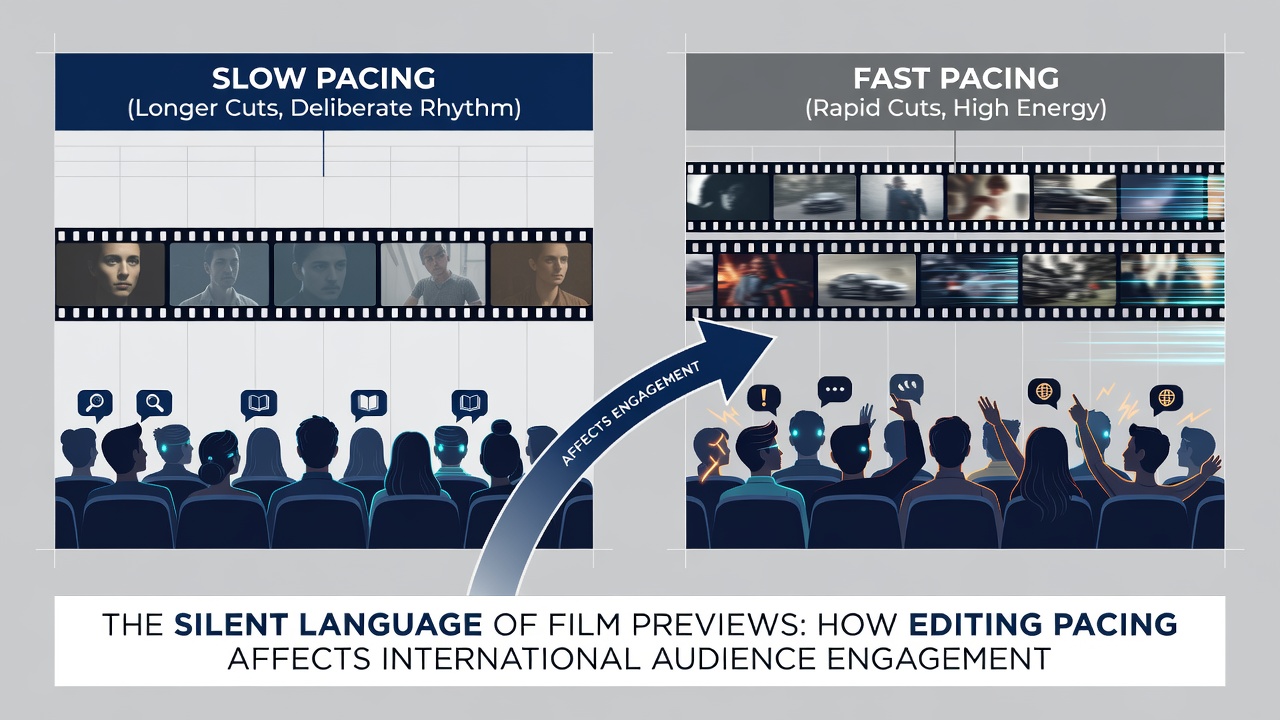
Case examples from major studio campaigns illustrate how pacing adjustments improved global trailer performance, such as when a science-fiction preview underwent revisions that extended certain shots by two frames each to better suit slower-burn narrative expectations in select territories. Those who've reviewed the resulting engagement statistics report sustained watch times that exceeded original versions by measurable margins. Industry organizations like the Motion Picture Association have documented similar outcomes in aggregated release data, underscoring the role of iterative editing in optimizing reach.
Data Patterns and Measurement Methods
Analytics firms gather information through view duration logs, social sharing velocity, and completion percentage breakdowns, and these figures reveal that previews released in August 2026 benefited from pacing calibrated to mobile viewing sessions that average under two minutes. Academic papers published in communication journals emphasize the importance of testing multiple iterations before wide distribution, since initial audience samples from one region often fail to predict outcomes elsewhere. Observers note that machine learning models now assist editors by predicting engagement shifts based on historical pacing data from comparable titles.
But here's the thing: even with advanced tools, human judgment remains central because cultural nuances in storytelling expectations resist full automation. Reports from the Australian Classification Board and similar bodies in other regions provide supplementary context on how preview content influences broader audience accessibility decisions. Those monitoring trailer performance continue to refine methodologies that combine quantitative metrics with qualitative feedback from focus groups spanning multiple continents.
Conclusion
Evidence from ongoing research and industry tracking confirms that editing pacing functions as a critical variable in how film previews connect with international audiences, influencing everything from initial click-through rates to eventual theatrical or streaming decisions. Continued collection of cross-regional data supports more tailored approaches that respect diverse viewing contexts while maintaining narrative coherence. As distribution channels expand, the relationship between pacing choices and engagement metrics will likely remain a focal point for editors and analysts alike.