Shifts in Global Film Consumption Driven by Accessibility Features in Streaming Technologies
Written by Noah Hartmann · Aug 11, 2026
Shifts in Global Film Consumption Driven by Accessibility Features in Streaming Technologies
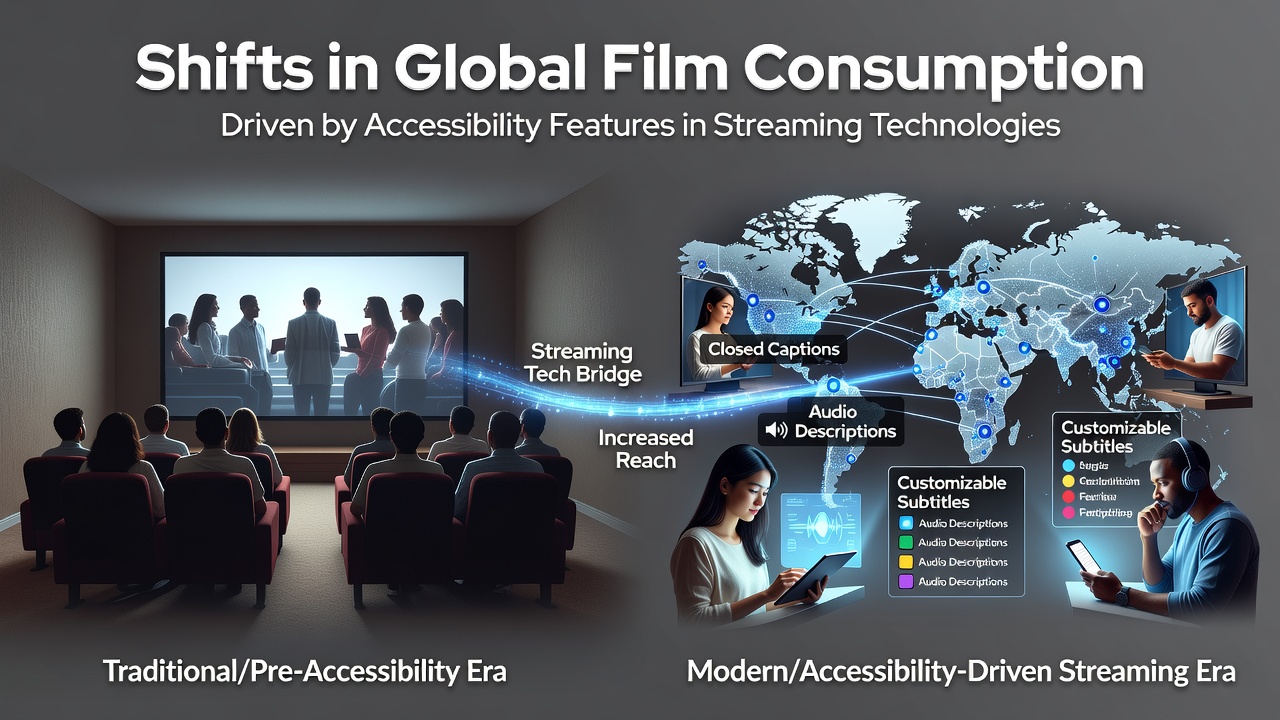
Streaming services have expanded their reach through accessibility tools that address barriers for diverse audiences, and these changes have altered viewing patterns on a worldwide scale. Closed captions, audio descriptions, and sign language interpretations now appear as standard options on major platforms, allowing viewers who might otherwise skip content to engage fully with films and series from different regions.
Data collected through 2026 shows steady growth in hours streamed by users who activate these features, with increases noted in both urban centers and rural areas where internet access has improved. Platforms report higher completion rates for titles that include multiple language tracks and descriptive audio, particularly when content originates from non-English speaking countries.
Key Accessibility Features Reshaping Access
Closed captions and subtitles extend beyond translation duties, serving viewers with hearing impairments and those watching in noisy environments or learning new languages. Audio description tracks narrate visual elements during pauses in dialogue, giving blind or low-vision audiences detailed context that supports narrative understanding. Many services added customizable caption styles by August 2026, letting users adjust font size, color, and positioning to match personal preferences.
Sign language windows appear in select releases, often positioned in corners without obstructing main action. Voice navigation and screen reader compatibility have also advanced, enabling users who rely on assistive technology to browse libraries and select titles independently. These tools combine to lower entry thresholds that once limited participation from large demographic groups.
Regional Data on Consumption Changes
Reports from the European Commission indicate that EU member states saw a 28 percent rise in streaming engagement among people with disabilities between 2023 and 2026, coinciding with enforcement of updated accessibility directives. In North America, figures from industry trackers show similar patterns, with platforms noting expanded watch times after rolling out enhanced description features across catalogs.
Asia-Pacific markets recorded parallel trends, where subtitling improvements allowed broader uptake of international productions. Australian government statistics released in mid-2026 highlighted increased viewing among older populations once caption quality reached consistent standards. These shifts demonstrate how localized policy and platform investment interact to influence behavior across continents.
Impact on Global Content Distribution
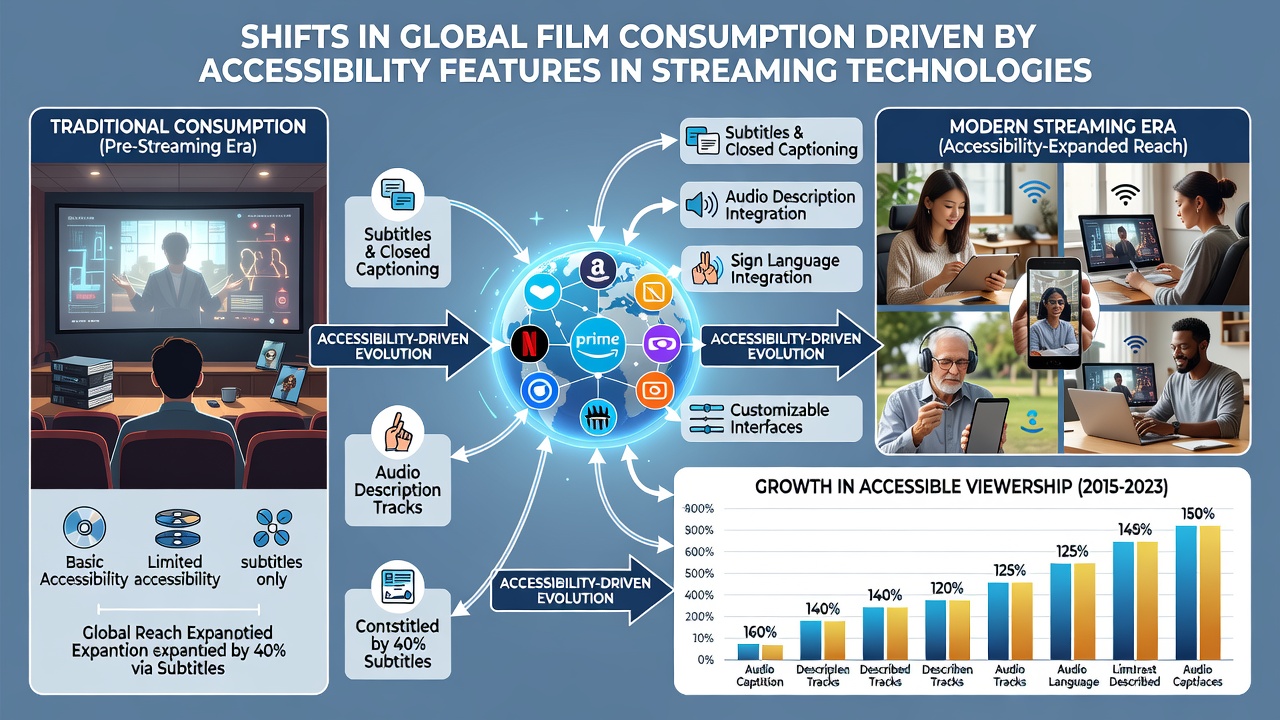
Producers now factor accessibility into early planning stages rather than treating it as an afterthought. Titles designed with built-in description scripts adn multi-language caption files move more easily across borders, reducing the need for separate post-production work. This approach shortens release timelines and lowers costs while meeting regulatory requirements in multiple jurisdictions simultaneously.
Viewership data reveals that accessible versions often outperform standard ones in total hours viewed, especially for documentaries and dramas that rely on visual nuance. Services track these metrics internally and adjust recommendation algorithms accordingly, surfacing accessible content to wider user segments. The result appears in broader discovery of films from smaller production markets that previously struggled with visibility.
Technology Integration and Platform Responses
Artificial intelligence assists in generating initial caption and description drafts, though human review remains essential for accuracy in idiomatic speech and cultural references. Companies allocate resources to refine these systems, responding to user feedback collected through in-app surveys. Integration with smart home devices further extends access, permitting voice commands that initiate playback with preferred settings already active.
Industry associations have published guidelines that encourage consistent implementation across competitors, creating a baseline users can expect regardless of which service they choose. These standards evolve with input from advocacy groups and technical experts, ensuring features keep pace with hardware developments such as higher-resolution displays and spatial audio.
Conclusion
Accessibility features embedded in streaming technologies continue to expand the pool of active viewers worldwide. Consumption patterns reflect greater inclusion as platforms refine tools and regulators maintain pressure for compliance. The data accumulated through August 2026 points to sustained growth in engagement metrics tied directly to these enhancements, establishing accessibility as a central driver of how audiences discover and finish global film content.