Shifting Currents: How Preview Clips Shape Global Access Patterns for Action Films and Serialized Dramas

Preview clips function as gateways that guide viewer decisions across continents, and their influence on access patterns for action films along with serialized dramas has grown more pronounced since the expansion of short-form video platforms in recent years. Data from industry tracking services shows that trailers and teaser segments now account for significant portions of initial discovery, particularly when distributed through social channels that reach audiences in multiple time zones simultaneously.
Mechanics of Preview Clip Distribution
Platforms release segmented clips ranging from 15 to 90 seconds that highlight key sequences, and these fragments often circulate independently of full trailers. Researchers at media analysis firms note that such segments receive higher engagement rates in regions where full trailers face length restrictions or slower loading speeds, which leads to concentrated viewing spikes during evening hours in Asia and early morning slots in Europe. The pattern holds steady because clips bypass traditional broadcast windows and land directly in recommendation feeds.
Action films benefit from this format since explosive set pieces translate effectively into brief bursts, yet serialized dramas rely on emotional hooks that build anticipation over multiple episodes. Observers tracking release calendars point out that studios time these drops to coincide wth major sporting events or music festivals, creating cross-promotional moments that extend reach without additional marketing spend.
Regional Shifts in Access Behavior
Patterns observed through 2025 and into July 2026 indicate that Latin American viewers increasingly start with action-oriented clips before migrating to full serialized drama seasons, whereas audiences in Southeast Asia show the reverse tendency. Figures from the European Audiovisual Observatory reveal that cross-genre sampling rose by measurable margins after platforms introduced unified clip libraries accessible across device types. This integration reduces friction for users who switch between mobile and television screens within the same viewing session.
But here's the thing: localized subtitles and dubbed audio tracks attached to clips accelerate adoption in non-English markets, and data indicates higher completion rates for dramas when clips include culturally adapted text overlays. Trade reports compiled by the Motion Picture Association document similar trends across North American and Australian territories, where clip-driven traffic correlates with subscription upgrades during peak summer release windows.
Platform Algorithms and Viewer Pathways
Recommendation engines prioritize clips based on watch time and share velocity, which creates feedback loops that favor certain titles over others. Those who've examined algorithmic logs find that action sequences with rapid cuts maintain viewer attention longer in initial tests, while drama excerpts emphasizing character conflict sustain interest across repeated views. The outcome surfaces in global charts where serialized content climbs faster when supported by consistent clip releases rather than single trailer launches.
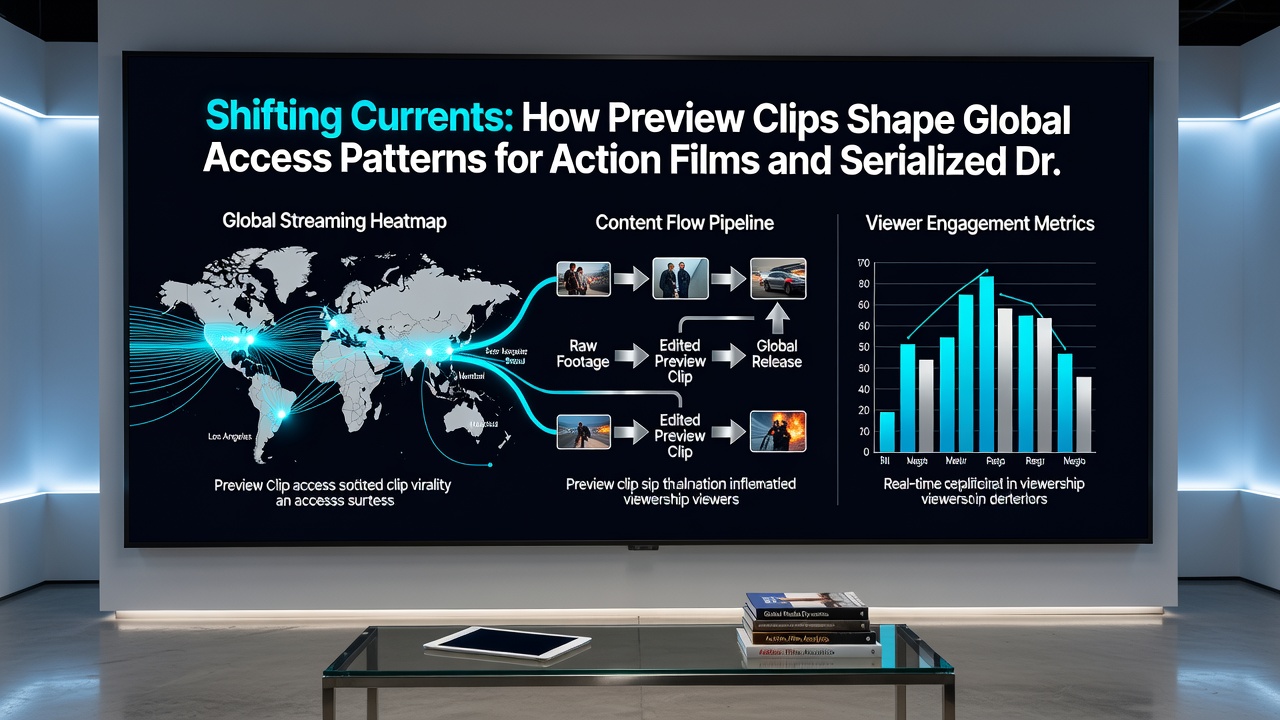
What's interesting is the way these pathways intersect with regional infrastructure. Areas with reliable high-speed connections see quicker transitions from clip to full content, yet emerging markets demonstrate prolonged engagement with clips themselves as standalone entertainment. Academic studies published through university media departments highlight that this dual consumption model alters traditional metrics used to measure success, shifting focus from opening weekend numbers toward sustained clip interaction data.
Content Type Variations and Timing Effects
Action films often deploy multiple clip variants tailored to different demographics, and evidence suggests this segmentation increases geographic spread when coordinated with local influencers. Serialized dramas, by contrast, maintain narrative continuity across clips to encourage binge behavior once full seasons become available. Patterns tracked through mid-2026 show July releases benefiting from summer viewing lulls in temperate zones, where longer daylight hours coincide with higher mobile consumption during commutes.
Yet the same data sets demonstrate that over-saturation of clips can reduce overall curiosity, prompting platforms to throttle distribution after threshold engagement levels are reached. Industry organizations monitoring these dynamics advise staggered rollouts that align with cultural calendars, including holiday periods when family viewing habits shift toward serialized formats.
Conclusion
Preview clips continue to redefine entry points for global audiences seeking action films and serialized dramas, with distribution mechanics and algorithmic amplification shaping access in measurable ways. Reports from regulatory and research bodies across multiple regions confirm that these short-form assets influence not only discovery but also the pathways through which full content reaches viewers, and the trends established through 2026 point toward further refinement of these strategies in subsequent cycles.