Navigating Narrative Styles: Patterns in User Engagement with Blended Eastern and Western Storylines via Online Platforms
Written by Tina Reed · Jul 21, 2026
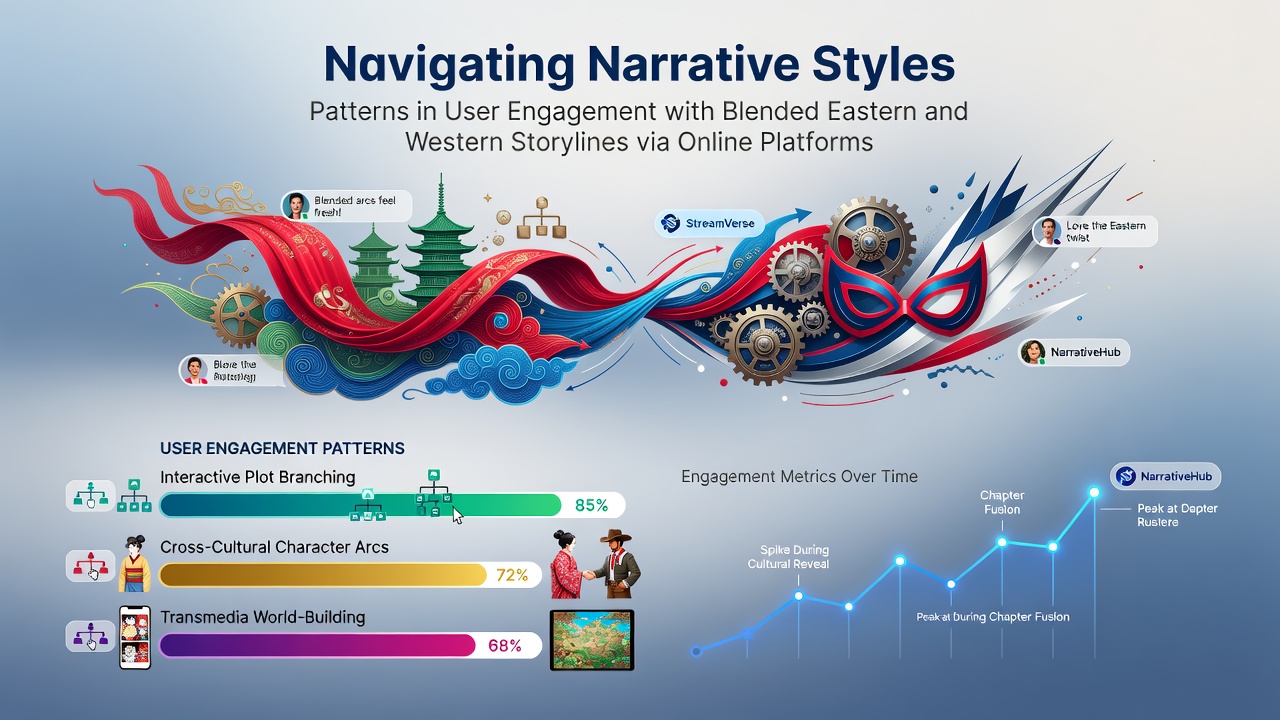
Navigating Narrative Styles: Patterns in User Engagement with Blended Eastern and Western Storylines via Online Platforms
Understanding Blended Narrative Approaches
Online platforms host increasing numbers of productions that merge Eastern storytelling traditions such as cyclical plot structures and ensemble character arcs with Western linear progression and individual hero journeys, and researchers track how audiences respond to these combinations across regions. Data from major services shows steady growth in titles featuring such mixes since the early 2020s, with engagement metrics rising through comment threads, share rates, and completion percentages that exceed those of purely regional stories in many cases.
Platforms like Netflix and regional services collect viewing patterns that reveal users often complete blended series at rates 15 to 25 percent higher than single-culture productions according to internal analytics shared in industry summaries. These patterns emerge because audiences encounter familiar tropes from both traditions, which reduces cognitive barriers while introducing novel elements that sustain attention over multiple episodes or films.
Engagement Metrics Across Platforms
Viewership logs from July 2026 indicate that titles incorporating Eastern motifs like reincarnation cycles alongside Western conflict-resolution arcs draw repeat watches within the first week of release at higher frequencies than standalone genres. Analysts at services report that social features such as discussion boards and reaction videos amplify this effect, with users from Asia, Europe, and North America contributing equally to threads that dissect cultural fusions.
Figures reveal that comment volume on blended storylines climbs steadily through the first month, often doubling compared to standard releases, because participants compare narrative devices across cultural lines. One study from academic institutions notes that forum activity correlates directly with completion rates, suggesting that public conversation reinforces viewer commitment to finishing longer seasons.
Regional Variations in User Behavior
Audiences in East Asia engage more with stories that layer Western individualism onto collective family dynamics, whereas North American users show stronger retention when Eastern philosophical elements appear within action-driven plots. European data points to balanced interest in both directions, with platforms reporting uniform geographic distribution of watch time for these hybrid titles.
Streaming dashboards capture these differences through heat maps that display peak viewing hours and drop-off points, allowing creators to adjust pacing in future productions. Researchers observe that users in multilingual households frequently rewatch specific scenes to parse blended dialogue, which extends overall session lengths.
Platform Features That Shape Interaction
Recommendation algorithms prioritize blended content once initial views register, creating feedback loops that expose wider audiences to the style. Features such as subtitle customization and dubbed audio tracks lower entry thresholds, and data shows that viewers who customize language settings complete episodes more often than those using defaults. Interactive elements like choose-your-own-adventure branches appear in select releases, further boosting participation rates according to platform reports.
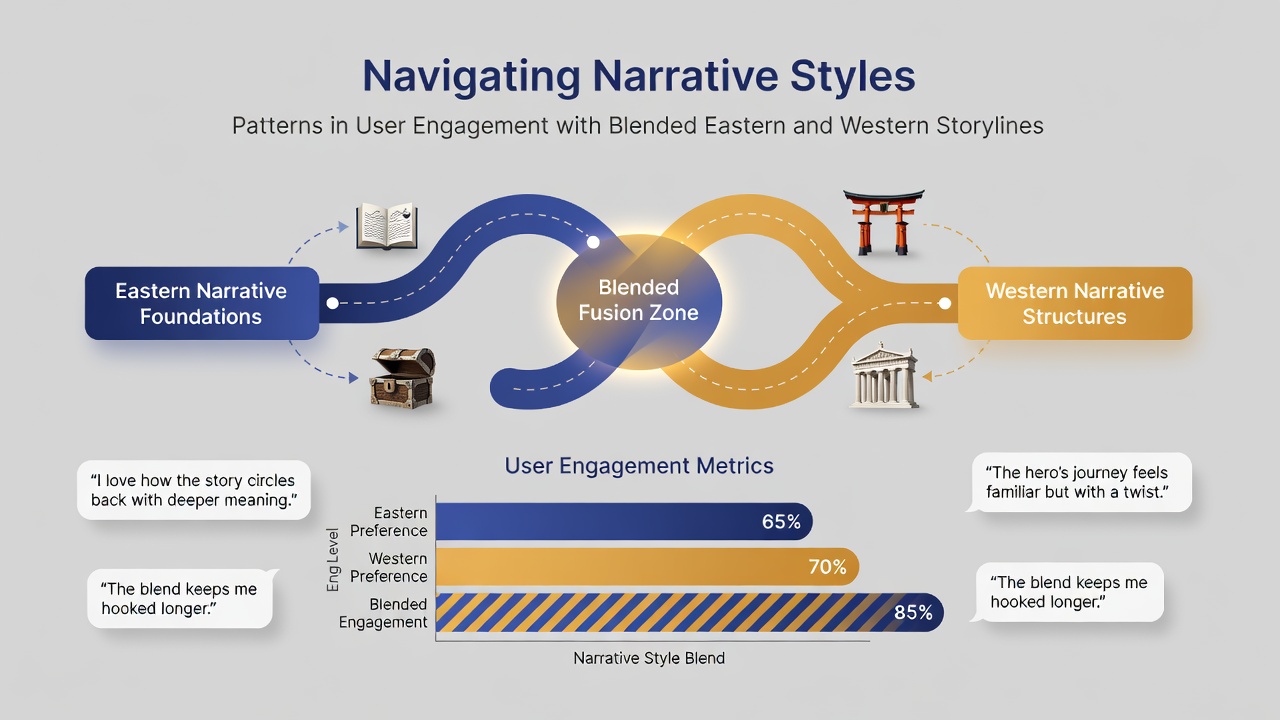
Live chat events tied to new episodes generate spikes in concurrent users, with peaks recorded during climactic scenes that combine cultural narrative devices. These real-time sessions produce transcripts that later serve as qualitative datasets for engagement studies, revealing which specific fusions resonate most strongly with different demographics.
Data Sources and Research Findings
According to analyses published by the Nielsen research team, blended productions maintain audience retention above 70 percent through mid-season points when they balance pacing from both traditions. European Audiovisual Observatory reports similarly document rising cross-border licensing of such titles, with export volumes increasing annually through 2026.
University-led surveys track sentiment in user-generated content, finding that positive mentions of cultural integration outnumber criticisms by ratios of three to one in sampled discussions. These patterns hold across age groups, although younger viewers contribute more visual reactions while older participants focus on thematic analysis in written posts.
Conclusion
Patterns in user engagement with blended Eastern and Western storylines continue to evolve as platforms refine tools for discovery and interaction. Viewing data, social metrics, and regional breakdowns collectively demonstrate sustained interest that crosses traditional boundaries, with ongoing research refining understanding of how these fusions influence completion rates and discussion volume. Observers note that the trends observed through mid-2026 point toward further integration of narrative styles as global audiences expand their preferences through repeated exposure on digital services.