Metadata Tagging Systems Organizing Multilingual Film Libraries Across Digital Platforms
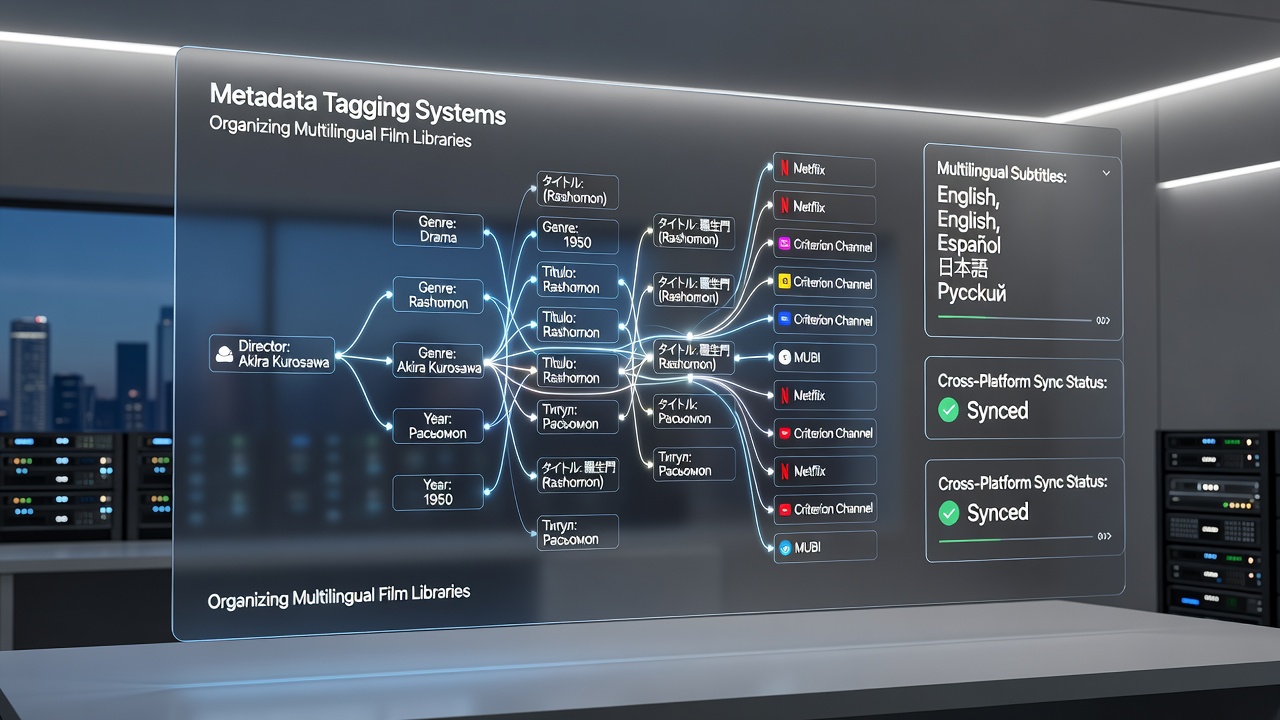
Metadata tagging systems serve as the backbone for organizing extensive collections of films in multiple languages on digital platforms, and these frameworks assign structured descriptors that cover everything from original titles and release dates to subtitle tracks, audio languages, and regional distribution rights. Researchers have documented how such systems enable efficient retrieval and management, particularly when libraries span Hindi, Tamil, Telugu, Korean, Spanish, and English productions that reach global audiences through streaming services.
Core Components of Metadata Frameworks
Standards like Dublin Core and custom extensions tailored for audiovisual content form the foundation, while platforms integrate additional fields to capture nuances such as dubbing variants, cultural context markers, and accessibility features including closed captions in multiple scripts. Data from industry reports shows that consistent tagging reduces search errors by up to 40 percent in multilingual environments, according to findings shared by the Library of Congress on bibliographic frameworks for media.
Automated tools powered by machine learning scan scripts, dialogue tracks, and promotional materials to generate initial tags, after which human curators verify accuracy for elements like genre classifications that differ across cultures. Observers note that this hybrid approach handles the complexity of scripts written in Devanagari, Hangul, or Cyrillic without loss of detail, and it supports cross-referencing between versions of the same film released in different markets.
Handling Multilingual Challenges in Practice
Language identification algorithms detect primary and secondary audio options, yet they must account for code-switching within dialogue or regional dialects that carry distinct identifiers. In June 2026 updates to the European Union's digital content directives emphasized requirements for metadata that flags content suitability across member states, which has prompted platforms to expand tag sets for compliance while maintaining search functionality for users browsing in their preferred languages.
Take one case where a major streaming service expanded its library with South Asian cinema, and experts found that granular tags for song sequences, runtime variations, and cast credits in original scripts allowed seamless integration with existing Hollywood and European holdings. Those who've studied these implementations report improved user navigation when filters combine language preferences with thematic elements such as historical drama or contemporary thrillers.
Interoperability Across Digital Platforms
Systems achieve interoperability through application programming interfaces that export and import standardized records, enabling a film tagged on one service to retain its descriptors when migrated or syndicated elsewhere. Research indicates that adoption of schemas from the International Federation of Film Archives supports this exchange, particularly for archival material that includes rare multilingual productions from the mid-20th century onward.

Platforms in North America, Europe, and Asia-Pacific regions coordinate through shared vocabularies that normalize terms for production companies, directors, and technical specifications like aspect ratios or color grading processes. Canadian heritage institutions have contributed datasets that demonstrate how consistent tagging preserves contextual information for indigenous language films alongside mainstream releases, and figures from academic studies reveal measurable gains in discoverability metrics following standardization efforts.
Impact on Accessibility and Search Efficiency
Enhanced tagging directly influences recommendation engines that surface relevant titles based on viewer history, language settings, and geographic location, while it also aids compliance with accessibility regulations that mandate detailed descriptors for audio description tracks and sign language options. Data compiled by research institutions in Australia highlights how metadata completeness correlates with higher engagement rates among diverse linguistic communities accessing film libraries online.
Yet challenges persist when legacy content lacks comprehensive records, prompting ongoing digitization projects that retroactively apply tags using optical character recognition on physical media packaging and archival notes. Observers note steady progress in these areas, with June 2026 marking expanded collaborations between technology providers and cultural organizations to refine automated classification for underrepresented languages.
Future Developments in Tagging Technologies
Emerging techniques incorporate semantic web principles that link tags across ontologies, allowing queries to retrieve related films even when terminology varies by region or era. University-led projects have tested these methods on sample collections containing parallel cinema from multiple countries, and results show stronger connections between thematic content that transcends linguistic boundaries.
Security considerations also shape system design, since detailed metadata can reveal distribution patterns that require protection under data governance rules. Platforms therefore balance transparency for users with safeguards that limit exposure of proprietary tagging structures during platform-to-platform transfers.
Conclusion
Metadata tagging systems continue to evolve as essential infrastructure for multilingual film libraries, supporting organization, discovery, and preservation across an expanding array of digital platforms. Evidence from standards bodies and research initiatives underscores their role in managing linguistic diversity while facilitating efficient workflows that adapt to regulatory and technological shifts. As collections grow through 2026 and beyond, these frameworks will likely incorporate further refinements to address emerging content formats and audience needs.