How Production Techniques in Contemporary Cinema Adapt to Demands of Portable Viewing Devices
Written by Tina Reed · Jul 23, 2026
How Production Techniques in Contemporary Cinema Adapt to Demands of Portable Viewing Devices
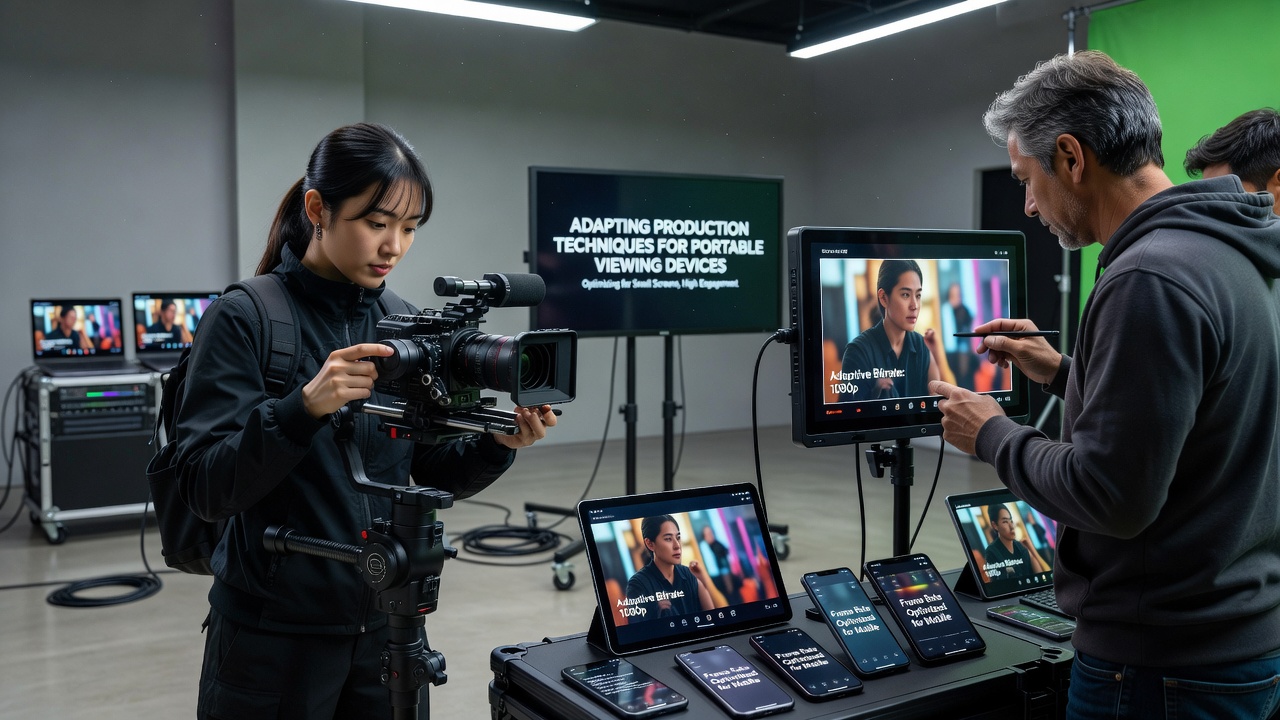
Contemporary cinema production has shifted in measurable ways since mobile devices became primary viewing platforms for many audiences, and these changes show up across technical workflows rather than remaining limited to distribution channels. Directors and cinematographers adjust framing decisions early in preproduction because vertical and square formats now compete with traditional widescreen ratios on phones and tablets, while colorists recalibrate grading pipelines to preserve detail on smaller, lower-brightness displays. Sound teams redesign mixes so dialogue remains intelligible through earbuds and built-in speakers instead of relying solely on theatrical surround systems.
Aspect Ratio and Framing Adjustments
Production crews increasingly shoot with multiple aspect ratios in mind from the first day of principal photography, and camera operators capture additional clean headroom and side space that can be reframed later for social media clips or mobile apps. Studies from the European Audiovisual Observatory indicate that over 60 percent of feature films released in 2025 included dedicated mobile versions prepared during postproduction, a figure that continued to rise into July 2026. These versions often employ dynamic reframing tools that track main action and keep key elements centered without requiring entirely separate shoots, although some directors still request dedicated vertical sequences for specific sequences.
Color Grading and Lighting for Smaller Screens
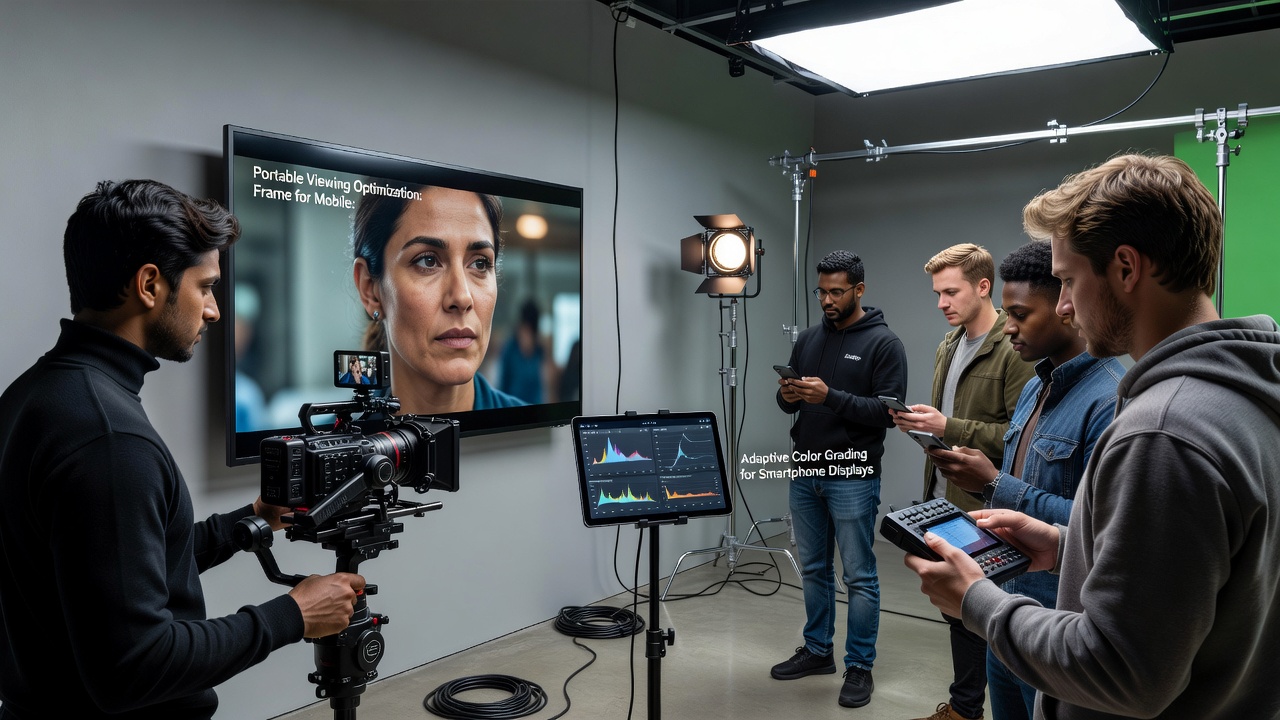
Lighting departments now test key scenes on calibrated phone and tablet monitors during prep, which means gaffers position practicals and fill lights to maintain contrast when images are viewed at reduced size and lower peak luminance. Colorists apply secondary grades that boost midtone clarity and reduce crushed blacks, because data from portable device usage logs show viewers frequently watch in daylight conditions where screen brightness drops. Researchers at the University of Southern California’s Entertainment Technology Center documented that films graded with mobile-first pipelines retain higher average viewer completion rates on smartphones compared with titles graded exclusively for cinema projectors.
Sound Design and Audio Mixing Changes
Re-recording mixers route dialogue and effects through consumer earbud simulations during final mixes, and they compress dynamic range more aggressively so quiet lines do not disappear when played at low volume on phones. Foley artists emphasize footsteps and cloth movement that register clearly through tiny speakers, while music editors balance scores so bass frequencies do not overwhelm portable playback. Industry reports compiled by the Canadian Media Producers Association show that projects allocating extra days to mobile audio verification experience fewer complaints about inaudible dialogue after release.
Narrative Pacing and Editing Patterns
Editors have shortened average shot lengths in many sequences because eye-tracking research reveals viewers on small screens lose focus faster when scenes hold for extended periods, and they intercut more frequently between close-ups and inserts to maintain engagement. Writers structure opening acts with earlier inciting incidents that hook audiences within the first two minutes, a pattern observed across titles tracked by streaming analytics platforms. Production schedules now include dedicated mobile edit passes where assistant editors flag sequences that feel too slow when viewed at arm’s length rather than across a darkened theater.
Practical Examples from Recent Productions
Take one major franchise installment shot in 2025 where the director requested two parallel edit timelines, one preserving theatrical pacing and another optimized for 9:16 vertical release on short-form platforms, and the mobile cut reached completion weeks ahead of the cinema version. Observers note that crews on location now carry portable reference monitors calibrated to common phone color spaces, allowing real-time checks that reduce costly reshoots later. Data from these sets indicate fewer continuity errors in vertical framing because operators account for safe areas during capture rather than relying on postproduction fixes alone.
Conclusion
Production pipelines continue to incorporate device-specific testing at every stage, from lens selection through final delivery, because viewing data demonstrates that audiences increasingly encounter films first on portable screens. These adaptations remain grounded in measurable technical requirements rather than speculation, and they show up as concrete workflow changes that crews document and refine with each project cycle.