Exploring Algorithmic Recommendations for Cross-Cultural Film Selections in Digital Libraries
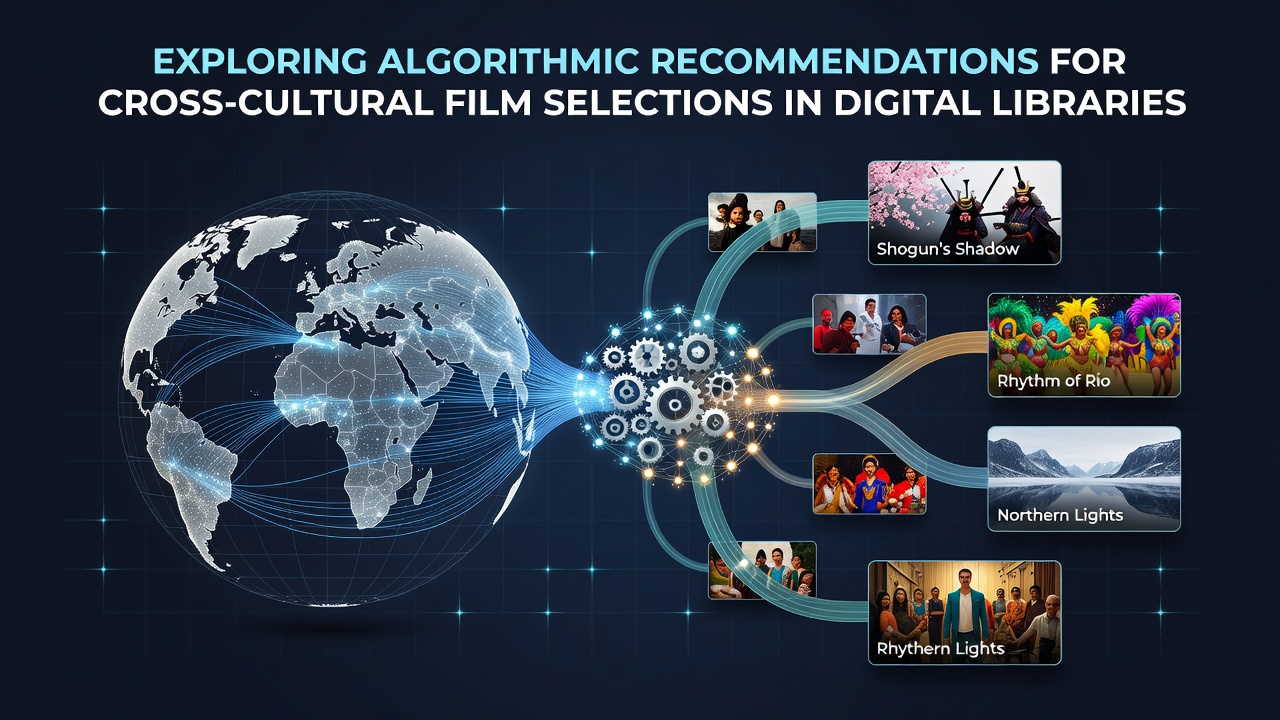
Digital libraries have expanded access to films from around the world, and algorithmic systems now play a central role in helping users discover content that crosses cultural boundaries. These systems analyze viewing patterns, metadata, and user interactions to suggest films that might otherwise remain hidden in vast catalogs. Observers note that as collections grow, the need for precise matching between viewer preferences and culturally diverse titles becomes more pressing.
Core Mechanisms Behind Film Recommendations
Recommendation engines in digital libraries typically rely on collaborative filtering, content-based analysis, and hybrid models that combine both approaches. Collaborative filtering identifies patterns among users who share similar tastes, while content-based methods examine film attributes such as genre, director, language, and thematic elements. Hybrid systems merge these techniques to improve accuracy when suggesting titles from regions that differ sharply from a user's primary viewing history.
Data from multiple library platforms shows that users who engage with one international title often receive suggestions from additional cultures within the same session. Researchers at institutions across North America and Europe have documented how embedding techniques map films into vector spaces that capture subtle connections between seemingly unrelated productions. This mapping allows the algorithm to bridge gaps between, for example, a Japanese animated feature and a Brazilian drama that share narrative structures even though they originate from different industries.
Addressing Cultural Bias in Training Data
Training datasets frequently overrepresent films from dominant production centers, which can skew results toward certain languages and storytelling traditions. Experts have developed mitigation strategies that include reweighting samples, introducing fairness constraints during model training, and incorporating metadata on cultural origin as explicit features. One study released in early 2025 by a Canadian research consortium demonstrated that adjusting for geographic representation increased the diversity of recommended titles by measurable margins without sacrificing overall user engagement metrics.
But here's the thing: language remains a persistent challenge because subtitle quality and translation availability vary widely across collections. Algorithms that incorporate natural language processing now scan subtitle files and script excerpts to identify thematic overlap even when dialogue differs. This approach has proven useful in libraries that serve multilingual communities, where users may prefer original audio tracks paired with translations in several languages.

Implementation in Institutional and Public Libraries
Public digital libraries in Australia and several European countries have integrated cross-cultural recommendation modules into their interfaces since 2023. These modules surface selections from Indigenous Australian cinema alongside European arthouse titles when user data indicates interest in historical narratives. According to figures published by the European Commission on cultural heritage initiatives, such integrations have contributed to higher rates of exploration beyond users' home-language catalogs.
Academic libraries at universities in the United States and Singapore have taken a different route by layering recommendation features on top of curated course collections. Faculty members supply seed titles, and the system then suggests related works from additional regions that complement assigned viewing. This method supports comparative film studies while exposing students to production contexts they might not encounter otherwise.
Developments Expected Around Mid-2026
Industry reports indicate that several open-source toolkits for cultural-aware recommendation will receive major updates in July 2026. These updates focus on real-time adaptation to shifting user demographics and the inclusion of newly digitized archival materials from Africa and Southeast Asia. Observers expect that improved handling of temporal context, such as recognizing when a film reflects a specific historical period within its culture of origin, will further refine suggestion quality.
Testing conducted by research groups in the United Kingdom and Japan has already shown that incorporating release-year metadata alongside cultural tags reduces the tendency for algorithms to favor recent releases over older works that share thematic depth. This adjustment helps preserve visibility for classic films that continue to influence contemporary productions across borders.
Evaluation Metrics and User Studies
Standard accuracy measures such as precision and recall remain important, yet libraries increasingly track diversity metrics that count how many distinct countries or languages appear in recommendation lists over time. A 2025 report from an Australian academic center found that users exposed to higher-diversity lists reported broader exploration patterns in follow-up sessions. These patterns held across age groups and device types, suggesting that algorithmic design choices influence discovery behavior at scale.
Feedback loops allow systems to refine suggestions based on explicit ratings or implicit signals like watch completion rates. When users from one cultural background consistently finish films from another region, the model strengthens connections between those clusters. This iterative process requires careful monitoring to prevent reinforcement of niche preferences that limit broader exposure.
Conclusion
Algorithmic recommendations continue to shape how audiences encounter films from varied cultural contexts within digital libraries. Ongoing refinements in data handling, bias correction, and metric design support more balanced exposure across collections. As libraries incorporate new materials and update their systems through 2026 and beyond, the capacity to connect viewers with cross-cultural selections rests on these technical and methodological developments.