Decoding Visual Effects Workflows in Contemporary Blockbusters Adapted for Varied Screen Sizes
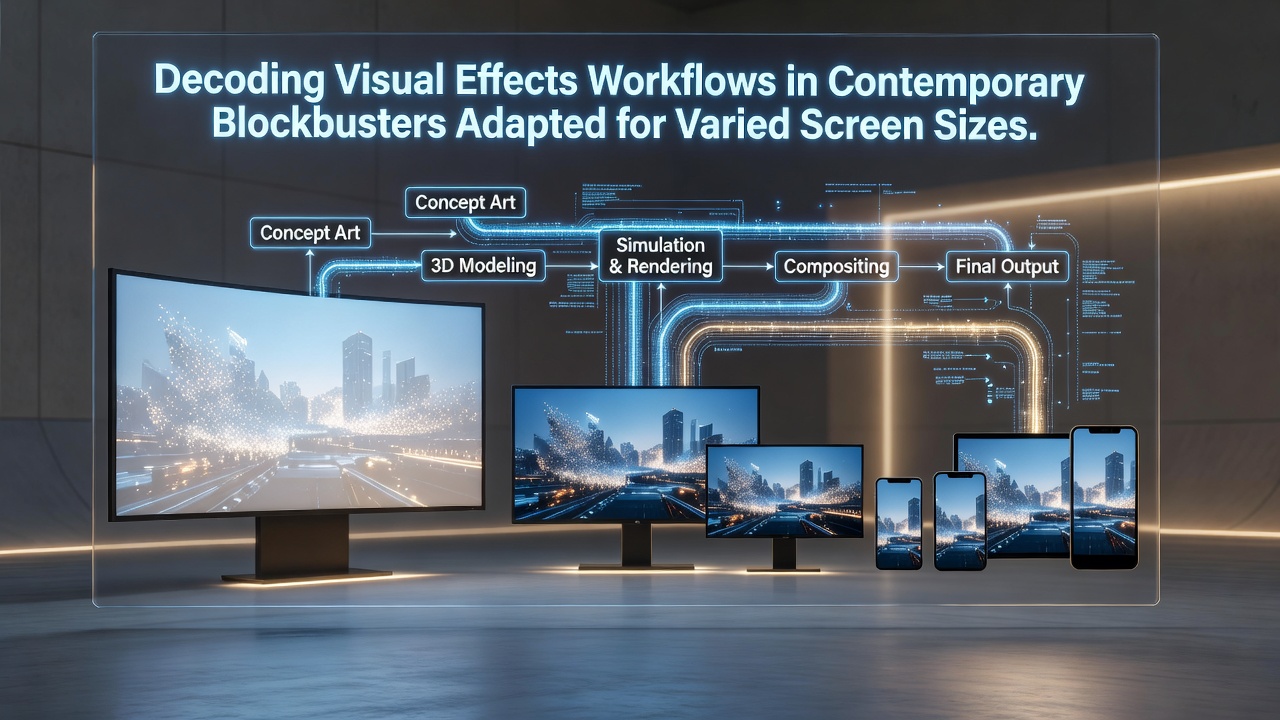 Contemporary blockbusters rely on intricate visual effects pipelines that stretch from initial concept through final delivery, and these pipelines must accommodate releases on theatrical screens, home televisions, tablets, and smartphones simultaneously. Studios coordinate teams across continents while maintaining consistency in detail and color regardless of viewing environment, which creates layered technical demands at every stage. Data from industry reports indicate that major productions allocate between 30 and 50 percent of their budgets to visual effects, with much of that expenditure tied to multi-format mastering rather than single-platform work. Researchers at institutions such as the University of British Columbia have documented how early decisions about asset resolution and procedural generation directly influence later adaptation costs.
Core Stages of the Modern VFX Pipeline
Previsualization teams build rough digital environments and camera paths weeks before principal photography begins, allowing directors to lock sequences that will later receive heavy digital augmentation. Once live-action plates arrive, layout artists align CG elements with practical footage while tracking software records camera movement in three dimensions. Modeling departments then generate geometry that must hold up under extreme close-ups in theaters yet remain efficient enough to render quickly on mobile devices.
Texture artists apply surface details that scale across resolutions, and simulation specialists handle cloth, water, and destruction sequences whose particle counts get optimized through level-of-detail systems. Lighting artists work in scene-referred color spaces so the same render passes can be graded for HDR cinema projectors or SDR phone screens without starting from scratch. Compositors finally assemble all layers, adding atmospheric effects and grain that match the original camera negative.Adapting Assets for Multiple Display Formats
Aspect ratio flexibility has become central because theatrical releases often use 2.39:1 while many streaming services prefer 16:9 or even vertical 9:16 for social clips. Teams create camera rigs that generate multiple framing options from a single master take, using crop guides rather than separate renders. Resolution scaling follows similar logic: 8K plates get downsampled with custom sharpening filters that preserve edge detail on 4K televisions yet avoid aliasing artifacts when viewed at 1080p or lower on handheld screens.
Dynamic range management requires careful tone-mapping curves because theatrical HDR exceeds the capabilities of most consumer devices. Studios therefore maintain multiple grading timelines, each calibrated to different peak luminance targets. Motion handling also diverges; high frame rate sequences popular in premium large format venues demand different motion blur settings than standard 24 fps deliveries destined for phones where judder appears less noticeable.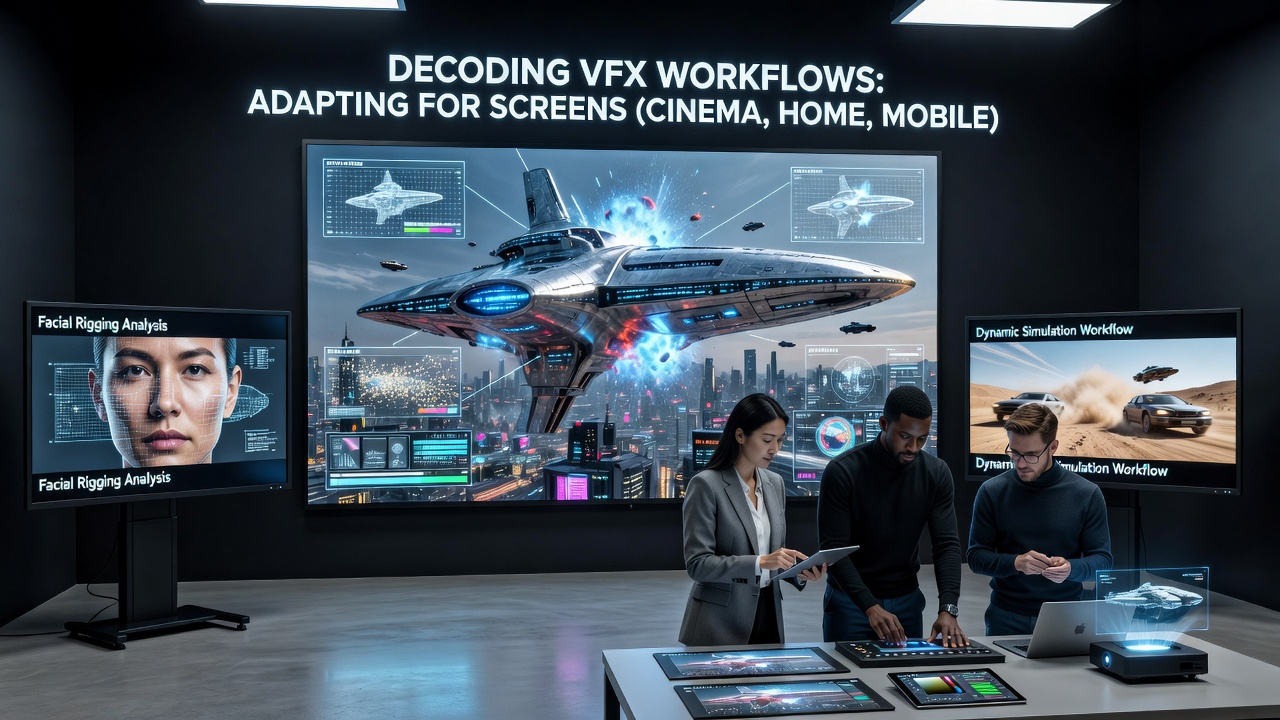
Software Ecosystems and Collaboration Tools
Production houses combine proprietary in-house tools with commercial packages such as Autodesk Maya, Foundry Nuke, and SideFX Houdini, routing data through shared asset management systems that track versions across time zones. Cloud rendering farms distribute workloads so overnight batches completed in Vancouver can be reviewed the same morning in London or Sydney. Version control protocols ensure that an update to a character rig in one department automatically propagates to downstream departments without manual file transfers.
According to documentation released by the Visual Effects Society, standardized metadata schemas now accompany every rendered element, recording color space, camera metadata, and intended display targets so downstream artists avoid guesswork when reformatting for alternate screens.Case Examples from Recent Releases
One studio handling a 2025 science-fiction tentpole generated modular cityscapes whose building counts could be reduced algorithmically for mobile viewing, preserving silhouette recognition while cutting polygon load by nearly 70 percent. Another production team working on a fantasy sequel created separate particle caches for water simulations; the high-density versions played only in premium theaters while lighter caches supported real-time playback tests on tablets. Observers note that both approaches emerged after test screenings revealed audience distraction when fine surface details disappeared on smaller displays. By June 2026 several pipelines are expected to incorporate machine-learning upscalers trained on paired theatrical and mobile masters, allowing a single high-end render to generate acceptable lower-resolution outputs with reduced manual intervention.
Conclusion
Visual effects workflows for contemporary blockbusters have evolved into multi-output systems that treat varied screen sizes as parallel deliverables rather than afterthought conversions. The integration of procedural generation, standardized metadata, and cloud collaboration has reduced redundant labor while preserving creative control across formats. Continued refinement of these methods will determine how efficiently future productions can reach global audiences without compromising visual intent on any platform.