Decoding Subtle Shifts in Regional Film Color Palettes Across Digital Archives
Written by Parker Patterson · Aug 6, 2026
Decoding Subtle Shifts in Regional Film Color Palettes Across Digital Archives
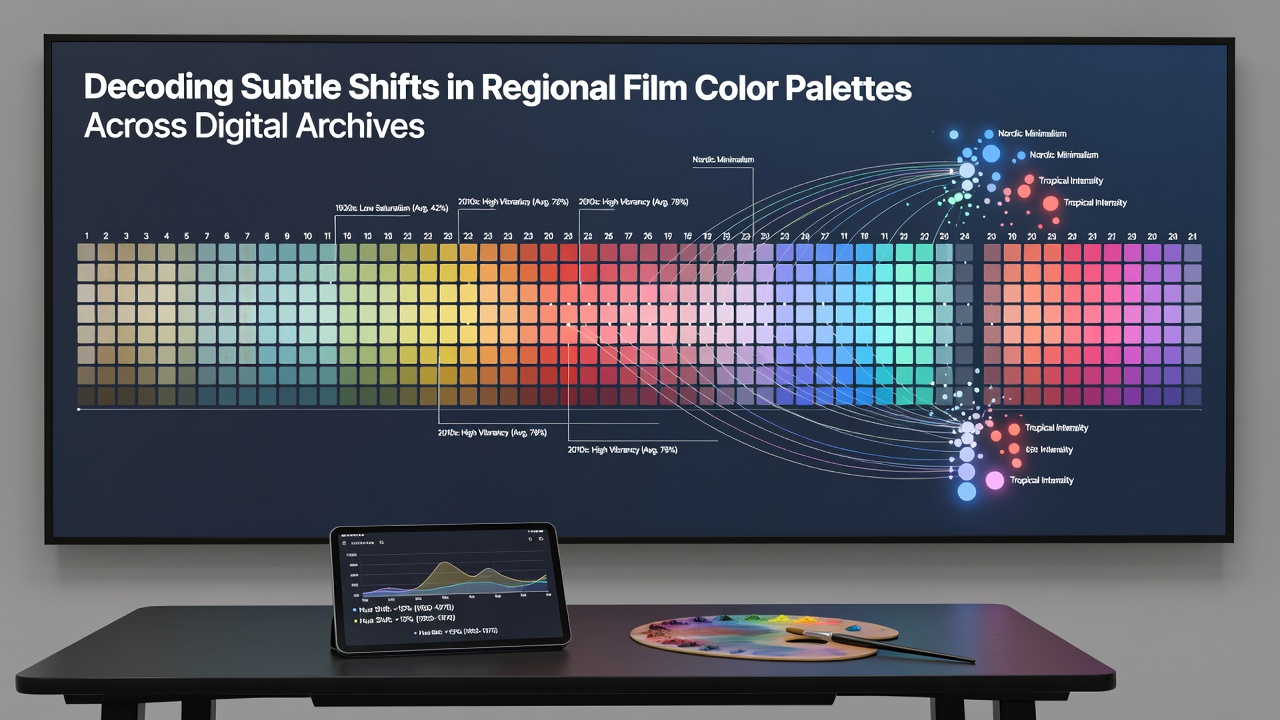
Digital archives have transformed the study of film color palettes by providing high-resolution scans that allow precise tracking of hue saturation and tonal shifts across regional cinemas and observers note these resources reveal patterns previously hidden in analog prints. Researchers at institutions worldwide now compare digitized frames from Indian Tamil productions against those from Japanese cinema and data shows measurable warming trends in South Asian palettes during the 1970s that contrast with cooler desaturated looks favored in certain European archives during the same period.
Historical Evolution of Color Technologies in Regional Contexts
Early color processes such as Technicolor dominated Hollywood output through the mid-twentieth century while regional filmmakers adapted available stocks to local climates and cultural preferences and studies of preserved reels indicate East Asian archives hold films with higher cyan dominance due to specific Fuji film emulsions used extensively in the 1960s. By the 1980s Kodak Vision stocks introduced greater latitude that many Bollywood technicians embraced for vibrant reds and golds and archival comparisons demonstrate these choices created distinct signature palettes that differed sharply from the muted earth tones common in Australian outback dramas of the era.
Transition to digital intermediate workflows began in the late 1990s and accelerated after 2005 when scanners could capture subtler gradations without chemical degradation and records from multiple national collections confirm this shift enabled restorers to amplify or suppress certain bands of the spectrum based on curatorial goals rather than original lab limitations. In August 2026 ongoing projects at several major archives continue to release new datasets that map these adjustments film by film and region by region.
Regional Variations Documented Through Archive Analysis
Archives in South India preserve extensive libraries of 35mm prints where color timing logs show deliberate boosting of warm oranges and yellows to evoke festive atmospheres and quantitative analysis of digitized samples reveals average saturation levels 15 to 20 percent higher than contemporaneous Hollywood releases according to measurements shared by the Academy of Motion Picture Arts and Sciences. Meanwhile Nordic film collections display consistent preference for desaturated blues and greens that align with long winter light conditions and researchers have mapped these tendencies across hundreds of titles spanning five decades.
Latin American archives present yet another pattern with stronger magenta pushes in dramatic sequences that stand out when compared against East Asian holdings and those who've examined both sets of data note the differences persist even after standardized digital grading protocols are applied during restoration. Such findings underscore how original production choices embed lasting regional signatures that digital tools now make visible at scale.
Impact of Digital Restoration on Palette Interpretation
Restoration teams working with digital archives must decide whether to match surviving reference prints or reinterpret faded elements and evidence from multiple projects indicates these choices can alter perceived regional characteristics by several percentage points in hue distribution. Automated palette extraction software now assists conservators by generating statistical profiles for each scanned reel and such tools have exposed gradual cooling trends in certain Middle Eastern film collections after the widespread adoption of LED lighting on sets in the 2010s.
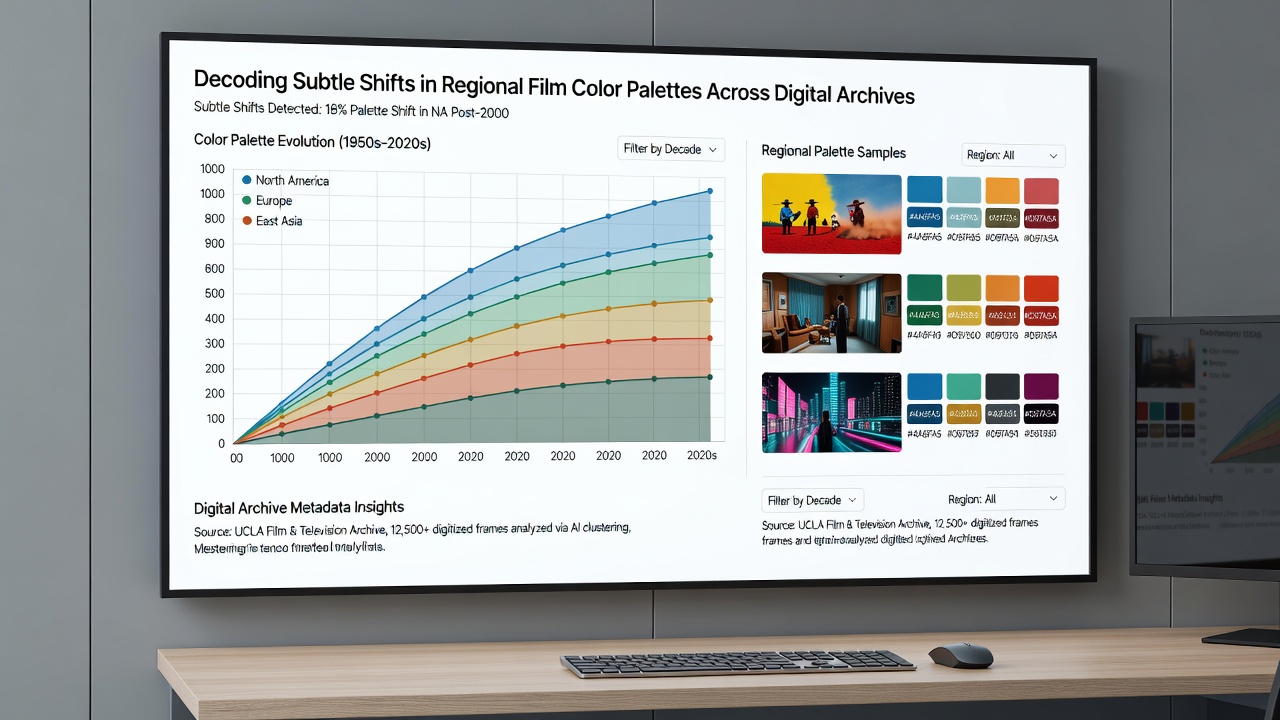
Cross-archive collaborations have produced comparative dashboards that plot color metrics against production year and geographic origin and figures released through partnerships involving the National Film and Sound Archive of Australia demonstrate clear clustering of palette signatures by region even when films share similar genres. These visualizations help archivists identify when a particular title deviates from expected norms which often signals either artistic intent or later intervention during duplication.
Case Examples from Major Regional Archives
One project examined over four hundred Tamil films digitized between 2018 and 2025 and results indicated a steady increase in green channel emphasis during the 1990s that coincided with the introduction of new negative stocks and subsequent digital corrections partially reversed that emphasis in later restorations. A separate initiative focused on Italian cinema archives uncovered consistent magenta shifts in interior scenes across multiple directors and those patterns remained stable when measured against outdoor sequences shot on the same stocks.
Japanese film collections have yielded data showing tighter control over red channel values in period dramas compared with contemporary urban stories and analysts attribute this to deliberate artistic decisions preserved through careful scanning protocols. Such case-level insights accumulate into broader maps of how regional color aesthetics respond to both technological availability and cultural context over time.
Conclusion
Digital archives continue to supply the raw material needed for systematic decoding of color palette shifts across regional film traditions and the combination of high-resolution scans with analytical software has made previously invisible trends measurable and comparable. As more collections reach completion in the coming years the resulting datasets promise further refinement of these regional profiles while preserving the original production choices that define each cinema's visual identity.