Cross-Cultural Narratives: How Drama Series from India and the US Intersect in Online HD Streaming Ecosystems
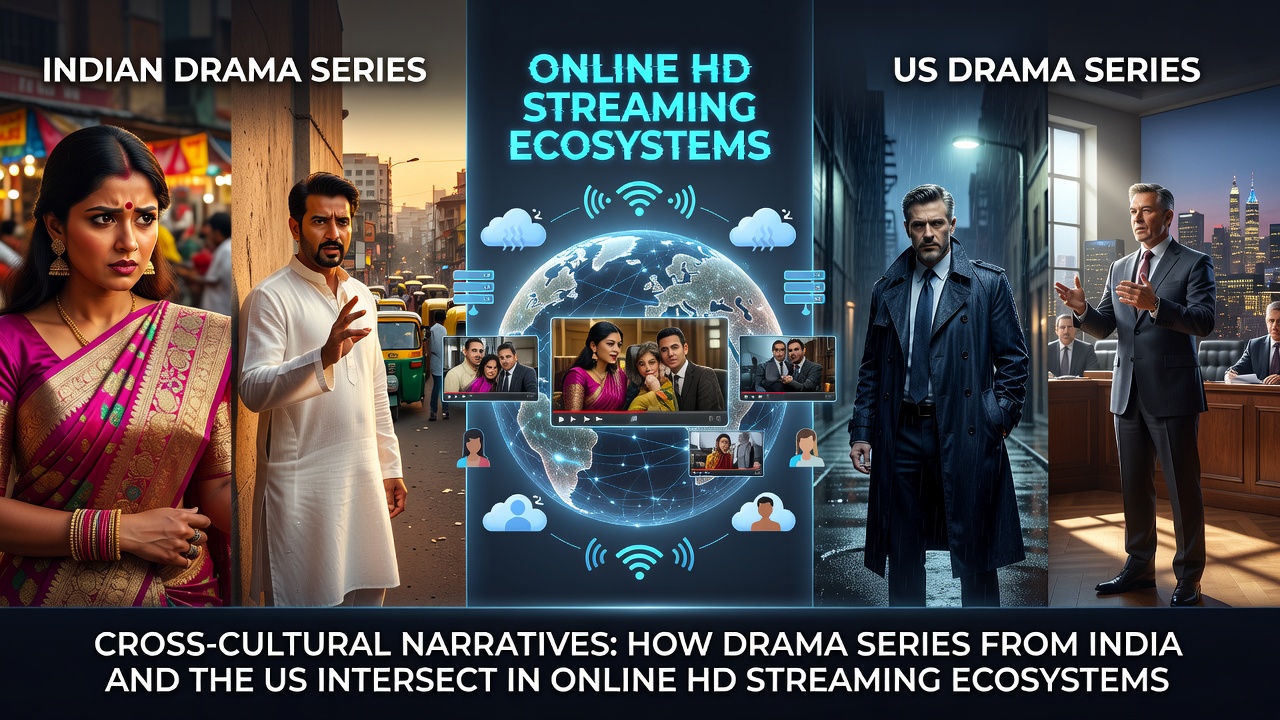
Drama series originating in India and the United States have established overlapping audiences through global streaming services that deliver HD content across borders, and platforms such as Netflix along with Amazon Prime Video have facilitated this exchange by licensing productions from both countries on unified interfaces. Viewers in urban centers across North America and South Asia encounter these series through recommendation algorithms that highlight thematic similarities, while subtitles and dubbing options reduce language barriers that once limited cross-regional access. Data compiled by industry analysts indicate that joint catalog expansions occurred steadily between 2023 and 2025, setting the stage for further integration visible in July 2026 when new seasons of flagship dramas launched simultaneously in multiple territories.
Platform Infrastructure Supporting Shared Access
Streaming providers maintain servers optimized for high-definition playback that accommodate traffic spikes from simultaneous releases, and content delivery networks route streams efficiently to users in India as well as the United States without requiring separate regional subscriptions in most cases. Regulatory frameworks in each country address licensing and taxation differently yet converge on requirements for local language support that encourage platforms to subtitle American procedurals for Indian audiences and adapt Indian family sagas for American viewers. Observers note that these technical and policy alignments create environments where narrative styles migrate across productions, resulting in hybrid storytelling techniques that incorporate ensemble casts common in both traditions.
Narrative Elements Crossing Cultural Boundaries
Story arcs in Indian drama series often emphasize multi-generational family conflicts and moral dilemmas resolved through collective decision-making, whereas American counterparts frequently center individual protagonists navigating institutional challenges, yet recent co-productions and format adaptations have merged these approaches into single seasons that alternate between personal introspection and group dynamics. Research from academic institutions tracking viewer engagement shows increased retention rates when episodes blend suspense structures typical of US thrillers with emotional resolution patterns drawn from Indian serials, and algorithms adjust suggestions accordingly to retain subscribers across demographics. In July 2026 several platforms reported simultaneous premieres of series that explicitly reference these blended techniques, allowing audiences to trace influences without switching services.
Viewership Patterns and Data Trends
Figures released by the Telecom Regulatory Authority of India reveal sustained growth in international content consumption among urban households equipped with broadband, while comparable metrics from the Canadian Radio-television and Telecommunications Commission document parallel interest in South Asian productions among diaspora communities in North America. These patterns demonstrate that drama series function as entry points for broader cultural exposure rather than isolated entertainment choices, and platforms respond by curating playlists that pair episodes thematically instead of segregating by country of origin. Studies conducted by university research groups further indicate that such pairings correlate with higher completion rates across entire seasons, suggesting structural compatibility between the two narrative traditions.
Production Collaborations and Format Exchanges
Co-production agreements between Indian studios and American networks have accelerated since 2024, enabling shared writing rooms that incorporate dialogue rhythms and plot pacing drawn from both markets, and these partnerships extend to post-production facilities that standardize color grading and sound design for HD delivery. Talent migration follows similar routes as actors and directors move between projects filmed in Mumbai and Los Angeles, carrying stylistic preferences that appear in subsequent independent productions released on the same platforms. Industry reports compiled by the OECD highlight how digital trade in audiovisual services benefits from these exchanges, noting reduced duplication of technical infrastructure when series share post-production pipelines.
Challenges in Maintaining Distinct Identities
Localization teams balance cultural specificity against universal appeal when adapting scripts for global release, and this process sometimes results in dialogue adjustments that preserve core conflicts while softening references unfamiliar to secondary audiences. Yet the underlying narrative frameworks remain intact because streaming interfaces preserve original versions alongside dubbed tracks, allowing dedicated viewers to compare interpretations directly. Data from multiple regulatory bodies confirm that complaints regarding cultural misrepresentation have declined as platforms implement feedback mechanisms tied to episode releases, indicating that iterative refinements improve cross-cultural reception over successive seasons.
Conclusion
Online HD streaming ecosystems continue to serve as conduits for drama series that originate in India and the United States, and the intersections manifest through shared platforms, adapted storytelling conventions, and synchronized release schedules that have become more pronounced by July 2026. Technical capabilities, regulatory alignments, and production partnerships sustain these connections while preserving enough regional distinction to maintain viewer interest across markets. As catalogs expand and data on engagement accumulates, the patterns observed so far suggest ongoing evolution rather than convergence into a single homogenized format.