Behind the Buffer: Technical Factors Influencing Seamless Playback of International Movies in High Definition

Streaming international movies in high definition relies on multiple interconnected technical systems that work together to minimize interruptions and maintain consistent quality across regions. Data from global traffic analyses shows that video content accounts for over 70 percent of internet bandwidth usage in many markets and this figure continues to climb as more viewers access films from diverse countries.
Network Infrastructure and Bandwidth Demands
High-definition streams typically require sustained download speeds between 5 and 25 megabits per second depending on resolution and codec efficiency while 4K content pushes those numbers higher. Observers note that international viewers often face variable connections because undersea cables and regional peering points create latency differences when content originates from servers located thousands of kilometers away. According to reports published by the Australian Communications and Media Authority, average fixed broadband speeds in urban areas reached 50 megabits per second by early 2025 yet rural and cross-border links still experience fluctuations that trigger adaptive bitrate adjustments.
Content delivery networks place edge servers closer to end users to reduce the distance packets travel. These distributed systems cache popular international titles locally so that a viewer in Europe accessing a Korean drama or a Latin American action film pulls data from a nearby node rather than a distant origin server. When demand spikes during evening hours in multiple time zones the load balancing algorithms redistribute traffic to prevent congestion at any single point.
Video Codecs and Compression Techniques
Modern playback depends on efficient codecs that shrink file sizes without visible quality loss. H.265 and AV1 deliver better compression than older H.264 standards allowing high-definition streams to travel over narrower connections. Researchers at technical institutes have measured up to 30 percent bitrate reductions with AV1 on complex scenes that feature fast motion or detailed backgrounds common in many international productions. Device manufacturers integrate hardware decoders for these codecs so smartphones tablets and smart televisions handle decoding without draining batteries or overheating.
Buffering Algorithms and Adaptive Streaming
Buffering occurs when the player preloads segments ahead of the current playback position. Advanced algorithms monitor connection speed in real time and switch between quality levels stored on the server. One study from the University of Tokyo documented how predictive models anticipate network dips during peak hours and preload additional segments to keep the buffer full. International movie platforms often store multiple subtitle tracks and audio languages alongside video segments which increases the complexity of segment selection because synchronization must remain precise across language switches.
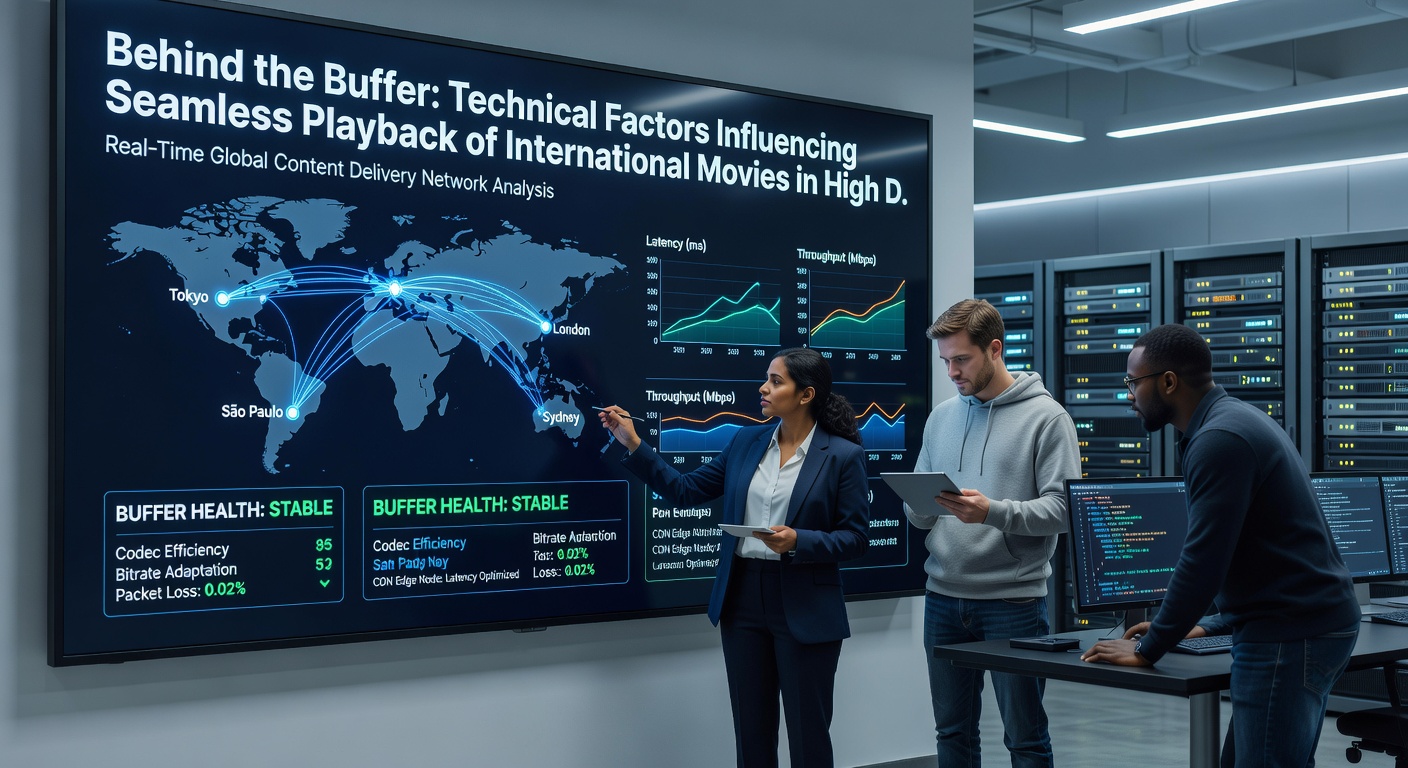
Packet loss and jitter introduce further challenges. Error correction methods such as forward error correction add redundant data so minor losses do not force a full rebuffering event. In June 2026 several major operators plan to trial enhanced QUIC protocol implementations that reduce handshake times and improve recovery from temporary network interruptions common in mobile and satellite connections.
Regional Content Delivery and Localization Factors
International titles frequently include region-specific dubbing or subtitle files that must load alongside the video stream. Content delivery networks route these auxiliary files through the same edge infrastructure yet synchronization errors can arise if latency differs between video and text tracks. Platforms maintain separate manifest files for each language combination allowing players to request only the needed components. Data compiled by the International Telecommunication Union indicates that subtitle-related requests now represent a measurable fraction of overall streaming traffic in multilingual markets.
Geo-restriction enforcement adds another layer. Systems check viewer location through IP address databases and DNS queries before granting access to licensed content. These checks happen within milliseconds and rarely interrupt playback once the session begins though they can influence initial connection routing choices.
Device and Software Ecosystem
Playback quality also depends on the receiving hardware. Graphics processing units decode high-definition video more efficiently than central processors and newer chipsets support higher frame rates and wider color gamuts found in recent international releases. Software updates to media players frequently refine buffer management logic based on telemetry collected from millions of active sessions worldwide.
Operating system level features such as background data restrictions or power-saving modes can throttle network access during playback. Developers account for these variables by designing fallback mechanisms that lower resolution gracefully rather than stopping the stream entirely.
Conclusion
Seamless high-definition playback of international movies emerges from the coordinated operation of network capacity codec efficiency content distribution systems and device capabilities. Continued improvements in protocol design and edge computing are expected to further reduce buffering incidents as global infrastructure expands through 2026 and beyond.